
- Home
- DescriptionNews
A sneak peek of how the COVID-19 situation will turn, lessons learned in Thailand’s health care system
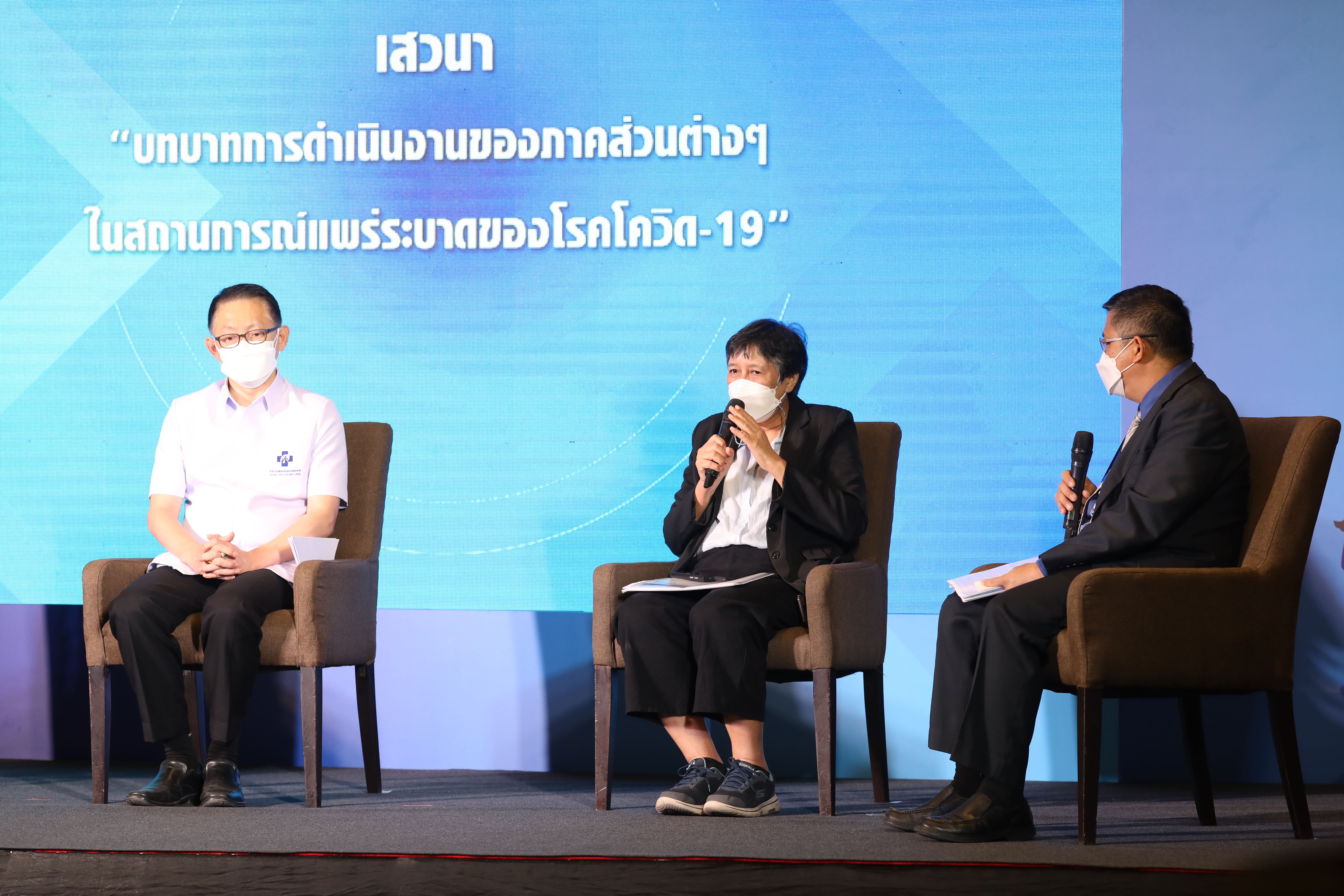
A sneak peek of how the COVID-19 situation will turn, lessons learned in Thailand’s health care system
All elements of Thailand’s healthcare system are encountering one of the toughest ever challenges as the novel coronavirus outbreak is spreading like wildfire. The cumulative number of new COVID-19 infections has already surpassed 200,000 in June, 2021.
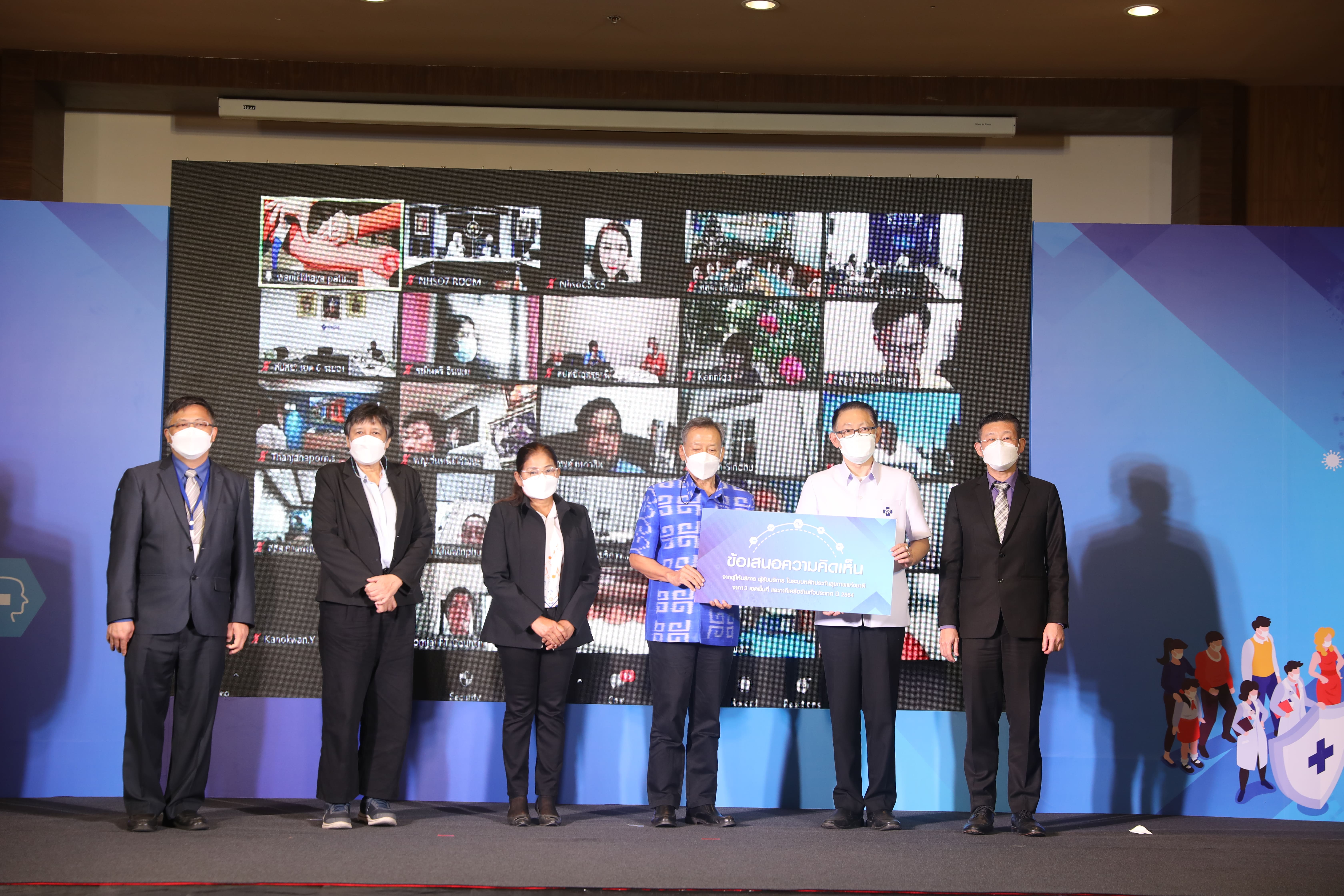
And as the end of the outbreak is still nowhere in sight, something new may need to be done to ease the situation of the country’s strained healthcare system. The National Health Security Office (NHSO) has therefore organised a forum for its partners to share their views on the matter.
Entitled “National health security system in the face of COVID-19”, the brainstorming session was held on June 25, 2021. It included a seminar on roles of each healthcare system’s divisions in the country’s fight to contain the outbreak.
Dr Tares Krassanairawiwong, director-general of Department of Health Service Support (DHSS), shared the department’s experience in working behind the scenes to support all other parts of the healthcare system to function as effectively as possible while struggling to cope with the impact of COVID-19 on them.
Right from the start of the COVID-19 outbreak in Thailand, he said, the DHSS has begun enhancing the capacity of laboratories, which play a key role in testing COVID-19; reorganised the system for managing public healthcare facilities and medical supplies; and began using social mechanisms such as health volunteers for COVID-19 control in each area.
And now that the country is struggling to deal with this new rapid wave of COVID-19, Bangkok has been running out of hospital beds to accommodate new COVID-19 patients, he said.
The DHSS has therefore come up with an idea to turn more than 71 hotels in the capital into temporary COVID-19 isolation facilities, which are actually capable of taking care of infected patients whose conditions are rated as yellow (with moderate symptoms) and green (with mild or no symptoms), he said.
These so-called Hospitels have altogether more than 10,000 beds for COVID-19 infected people, he said.
“We’ve also resolved to allow private parties to take part in handling COVID-19, especially in Bangkok [where the situation is most critical]. Five announcements have been issued to permit these private partners to support us in terms of healthcare resources pooling,” he said.
After COVID-19 was declared to be a medical emergency, all healthcare facilities, both privately owned and state-run, have begun working together in taking care of COVID-19 patients under healthcare cooperation similar to the Universal Coverage for Emergency Patients (UCEP) system, which is practiced under the Universal Coverage Scheme (USC), he said.
And to keep up with the changing COVID-19 situation, the NHSO tries to make its funding of healthcare services provided by any healthcare facilities in this same healthcare system as flexible and effective as possible, said Dr Jadej Thammatach-aree, secretary-general of the NHSO.
In the beginning of the outbreak in Thailand the overall capacity of laboratories remained limited, which had hindered the country’s ability to early detect new cases of COVID-19, he said.
At that time, the NHSO had therefore sought to divert the central budget of the government to fund the work of improving the capacity of these laboratories until the active case-finding strategy could be adopted to find new cases and bring them to receive necessary healthcare services at isolation units such as field hospitals, whose operations are also subsidised by the NHSO, he said.
Later when the government rolled out its mass COVID-19 vaccination drive to contain the outbreak, the NHSO began offering a new disbursement rate of 40 baht per vaccine injection service in a bid to accelerate and support the expansion of the national vaccination programme, he said.
At the same time, the NHSO has also begun implementing a new mechanism to boost public confidence in the government’s financial compensation programme for adverse events following vaccination, he said.
And most recently, the NHSO has begun drafting rules on a new financial compensation programme for “Home Isolation/ Community Isolation”, which will allow the people to undergo COVID-19 isolation at home, he said.
“COVID-19 has taught us a lesson -- the speed of responding to a crisis is the key to success,” he said.
In case of the financial compensation programme for COVID-19 vaccine recipients suffering adverse events, for instance, although the preliminary financial assistance being offered isn’t that much, it does improve public confidence in the government’s promise to take good care of them in the event they suffer any unwanted consequences of vaccination, he said.
COVID-19 has in a way accelerated certain systems designed to support the development of the country’s healthcare system, which had not before succeeded such as the telemedicine project, he said.
“On the one hand COVID-19 came as a catalyst for change in several services, ideas, and organisational practices. It has been driven us to move forward to the new normal,” he said.
Watchari Nim-anong, president of Hua Pho sub-district local administration organisation in Suphan Buri’s Song Phi Nong district, meanwhile offered a broader picture in how Local Administration Organisations (LAOs) could make use of the Community Health Fund to support its fight against public health problems at the local level, including COVID-19.
As many LAOs remain reluctant to use this budgetary mechanism simply because they are worried about the strict inspection by the Office of the Auditor General (OAG) of their spending, a great deal of such money remains unused, she said.
“I insist you should never worry about the strict inspection by the OAG as long as you spend the given money for disease prevention and health promotion and for helping the people,” she said.
The fund is allowed to be used in case of outbreaks and disasters such as for purchasing COVID-19 prevention equipment for local education institutions, child development centres, elderly care centres and healthcare facilities, she said.
Saree Aungsomwang, secretary-general of Thailand Consumers Council, said the council is focusing on three areas of the government’s provision of healthcare services during the COVID-19 crisis.
They are the costs of healthcare services for COVID-19 infected patients that should be totally free, how limited medical emergencies are being defined and the quality of healthcare services being offered, she said.
She also urged the government to improve clarity and transparency in its communication with the public about COVID-19, such as details of the procurement of COVID-19 vaccines.
She also expressed concern over the possibility of Thailand joining the Comprehensive and Progressive Agreement for Trans-Pacific Partnership (CPTPP) that she said the government should put on hold until it is proved the country will truly benefit from this trade pact.