- Home
- DescriptionNews
NHSO engages disabled people in improving UCS benefits package
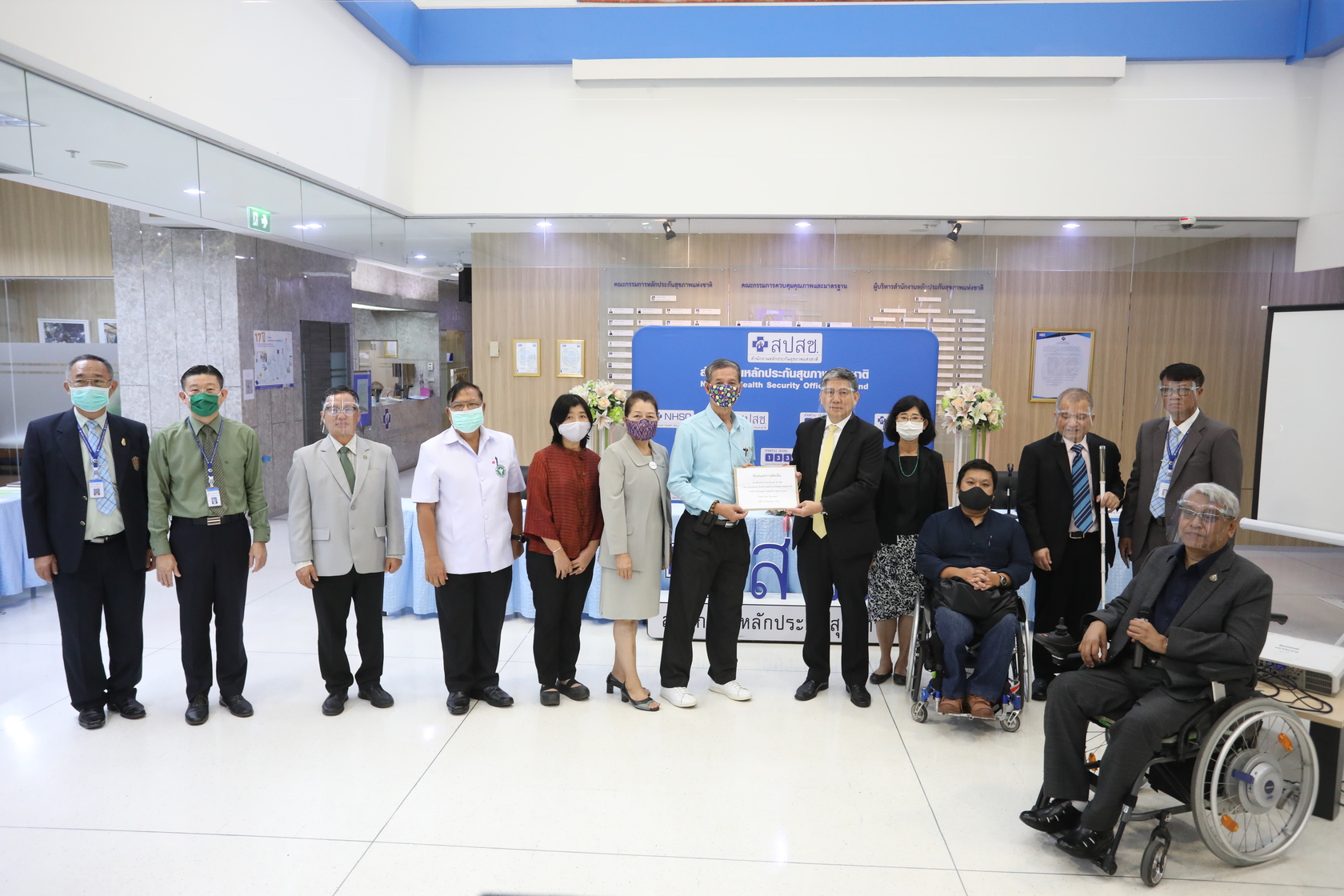 National Health Security Office (NHSO) held an annual public hearing for people with disabilities as parts of its commitment to engage multi-stakeholders in improving benefits package of Universal Coverage Scheme (UCS)
The public hearing was held via Facebook live on 10 June, adjusting to social distancing measures during the Covid-19 pandemic.
"2.7 million people with disabilities have registered in the UCS and get benefits package including free assistive devices and physical therapy," said Weerachai Konmanee, Director of the NHSO's community health services unit, during the hearing.
"The NHSO has always recognized their voices. We've considered them a part of our effort to improve benefits package and expand health service coverage."
When the UCS was introduced in 2002, the National Health Security Act set a legal framework for the NHSO to "encourage the process of participation" of health providers, purchasers, and local government organizations.
Having participation is proved to be an effective mechanism that drives the NHSO to develop new benefits package and expand the coverage of existing benefits. For example, the engagement of patients with AIDS/HIV and kidney failure led the NHSO to introduce free antiretroviral drugs and dialysis into the UCS benefits package in the late 2000s.
During the recent hearing, representatives of people with disabilities, health providers and local government organization expressed their ideas and raised the challenges of disabled care.
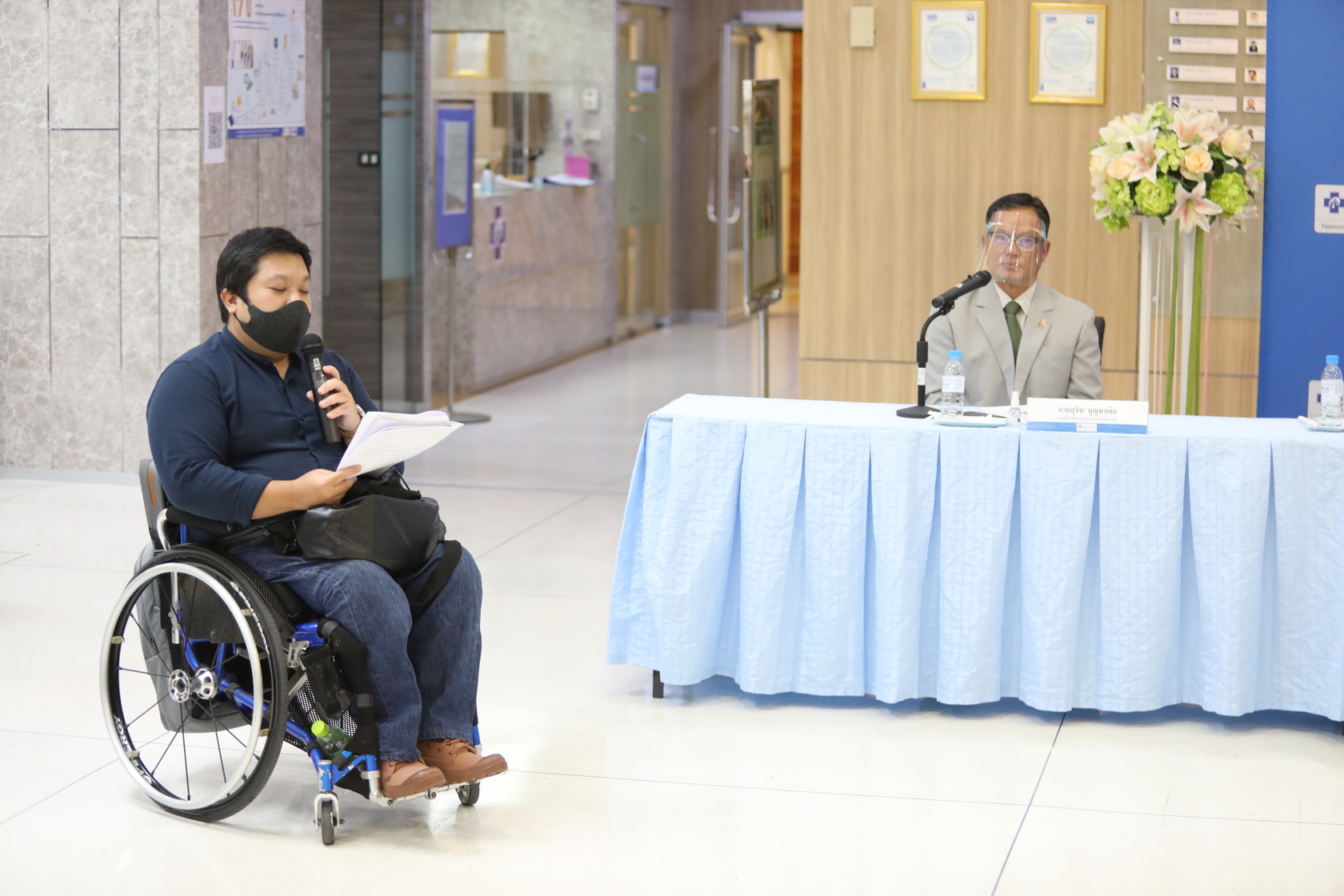
Montian Boontan, senator and the former president of Thailand Association of the Blind, said that Thailand needed more research and development (R&D) on assistive devices and medicines for disabled people.
"The NHSO should encourage more R&D that helps disabled people access a better quality of care," he said.
"Some medicines offered in the UCS benefits package are not always good in quality. If disabled people want better ones, they need to pay extra. Therefore, disabled people with low income can't access good medicines."
The hearing resonated the need for the NHSO to engage local government organizations into disabled care. In the past years, the NHSO has distributed UCS budget to local government organizations' projects for enhancing the life quality of vulnerable populations.
Sujin Boonmalert, Deputy Permanent-Secretary of Saraburi Provincial Administrative Organization, said that the NHSO had co-funded many projects with his organization including installing ramps in public buildings, sign languages training, and wheelchairs fixing for disabled people.
His organization plans to establish disabled care center in every sub-district, with the financial support from the NHSO.
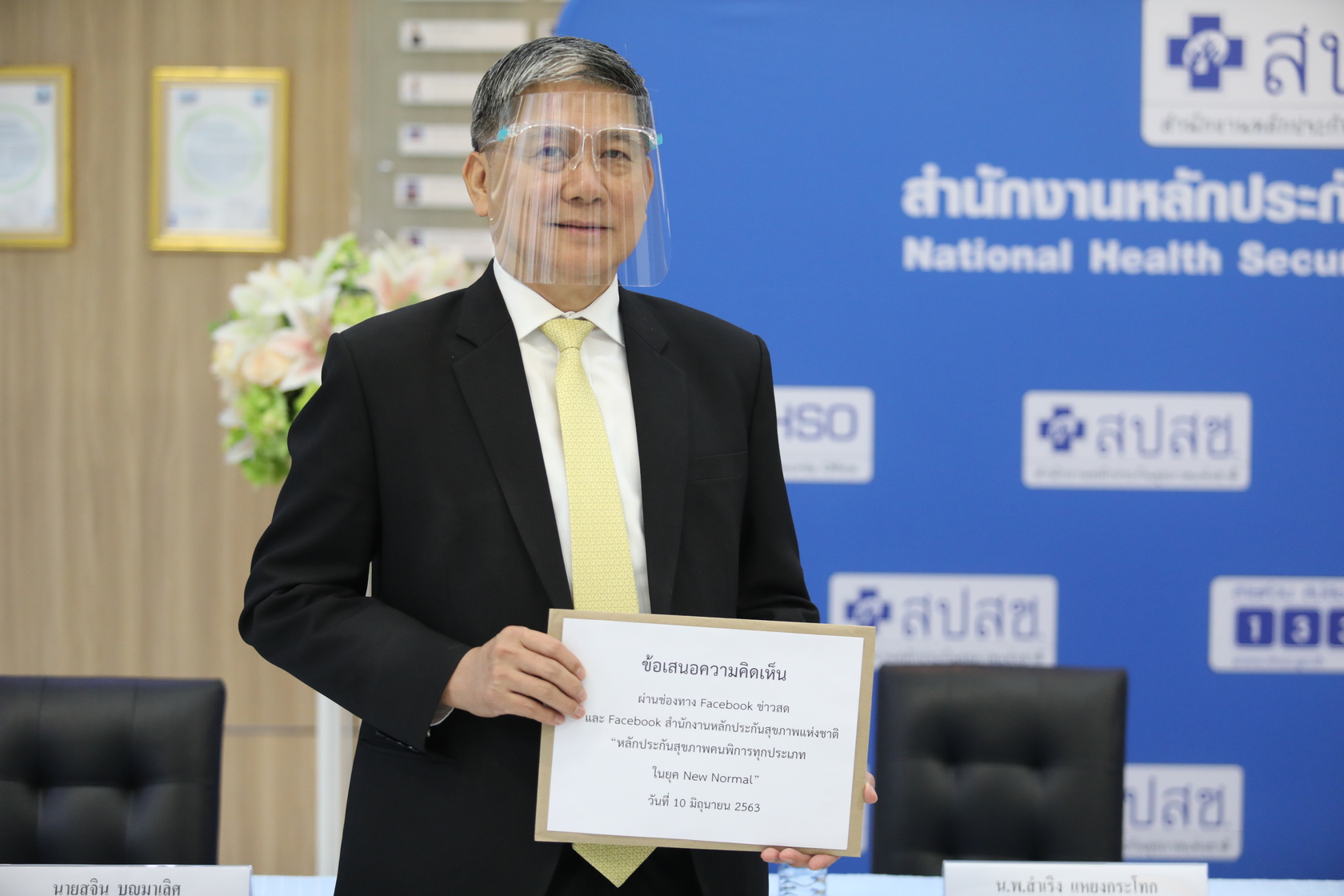
"We will take all opinions to our considerations. We want to increase the level of vulnerable groups' participation, which will help us improve the UCS," said Dr Jetsada Chokdamrongsuk, Chair of the hearing and the NHSO board member.