


Marking their 20th anniversary, Thailand’s local health security funds have grown from a 2006 pilot involving 888 local administrative organizations to a nationwide network of 7,759. The partnership has also expanded to provincial health security funds in 74 provinces, improving access to rehabilitation and essential assistive devices for patients, people with disabilities and older people, and to long-term care (LTC) reaching more than 430,000 people with dependency in their homes. In 2027, the NHSO plans to better integrate the three local funding mechanisms so that health services respond more closely to the needs of people in each area.
Dr. Jadej Thammatacharee, Secretary-General of the National Health Security Office (NHSO), said 2026 marks the 20th anniversary of the Local or Area Health Security Fund, a key starting point for cooperation between the NHSO and local administrative organizations in managing community health. The mechanism enables healthcare providers, civil society and communities to jointly identify problems, develop plans and organize services that meet local needs.
Over the past two decades, the partnership has expanded from health promotion and disease prevention at the subdistrict level to provincial health security funds—developed from provincial rehabilitation funds—and to the LTC system for older people and others with dependency. As a result, health services now extend beyond hospitals to early childhood development centers, schools, older people’s centers, rehabilitation centers, communities and households.
“The heart of this approach is to bring budgets and decision-making closer to the people, because every community has different health problems and needs. Local authorities and residents understand their own context best. The NHSO provides funding, rules, data and knowledge, while healthcare providers contribute technical support. When all parties work together, budgets are transformed into services that people can genuinely access,” said Dr. Jadej.
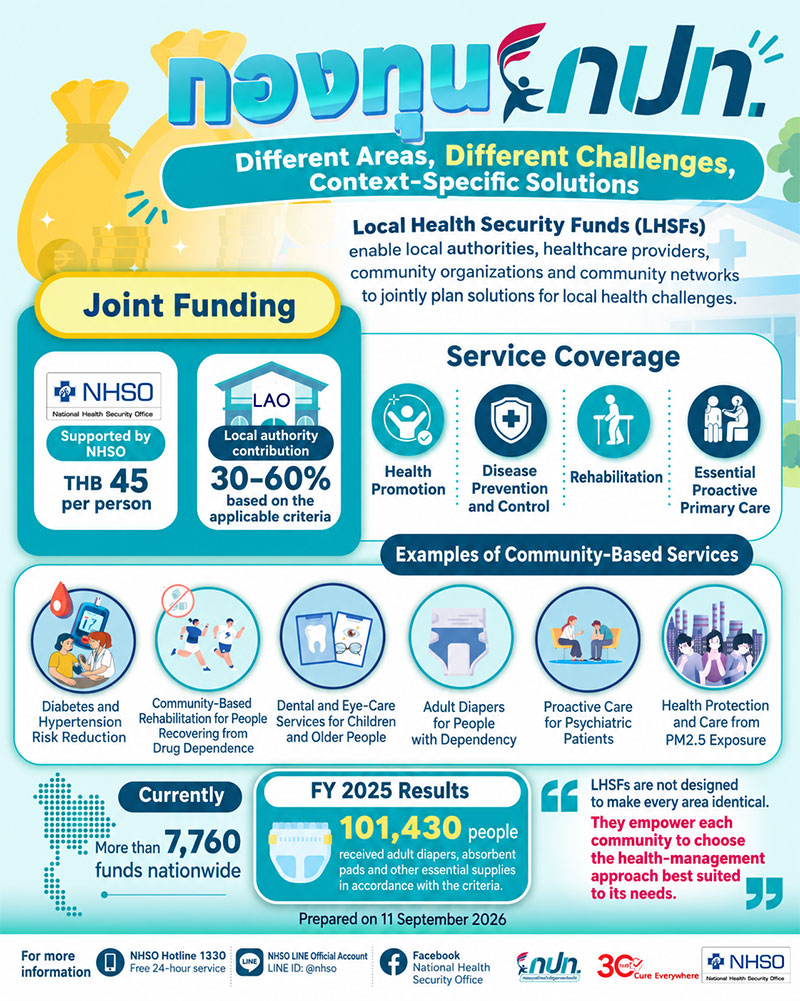
The Local Health Security Fund was launched in 2006 with the participation of 888 local administrative organizations. It operates as a matching fund between the NHSO and local authorities, supporting health promotion, disease prevention, rehabilitation and other essential services tailored to local circumstances. Healthcare providers, schools, early childhood development centers, village health volunteers, older people’s clubs, organizations of people with disabilities and civil society groups can jointly develop health projects for people of all ages.
Supported activities include child development and nutrition, oral healthcare, diabetes and hypertension screening, physical activity promotion, mental healthcare, fall prevention and communicable disease control.
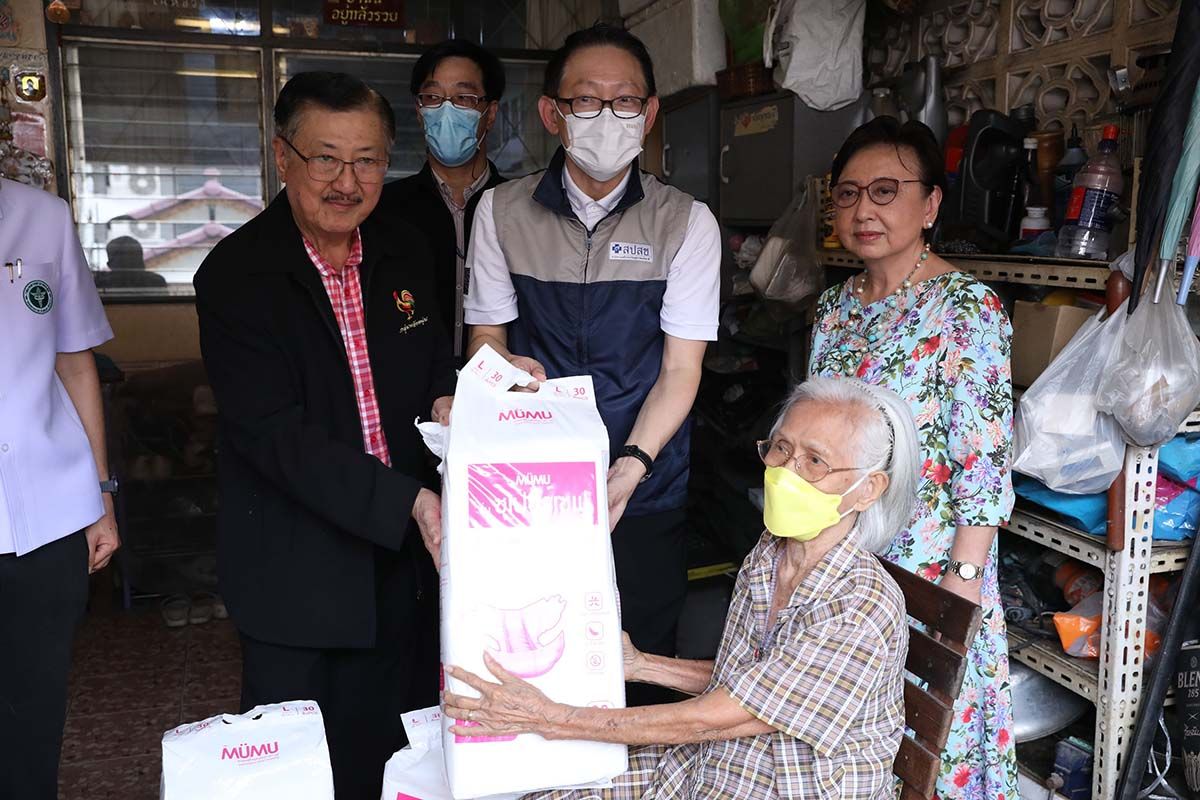
In fiscal year 2025, 7,759 local health security funds operated nationwide. They supported 160,286 projects with recorded disbursements, representing more than 4.61 billion baht in approved funding. The funds also provided adult diapers, absorbent pads and other essential supplies to 101,430 people with urinary or fecal incontinence and others requiring such products.
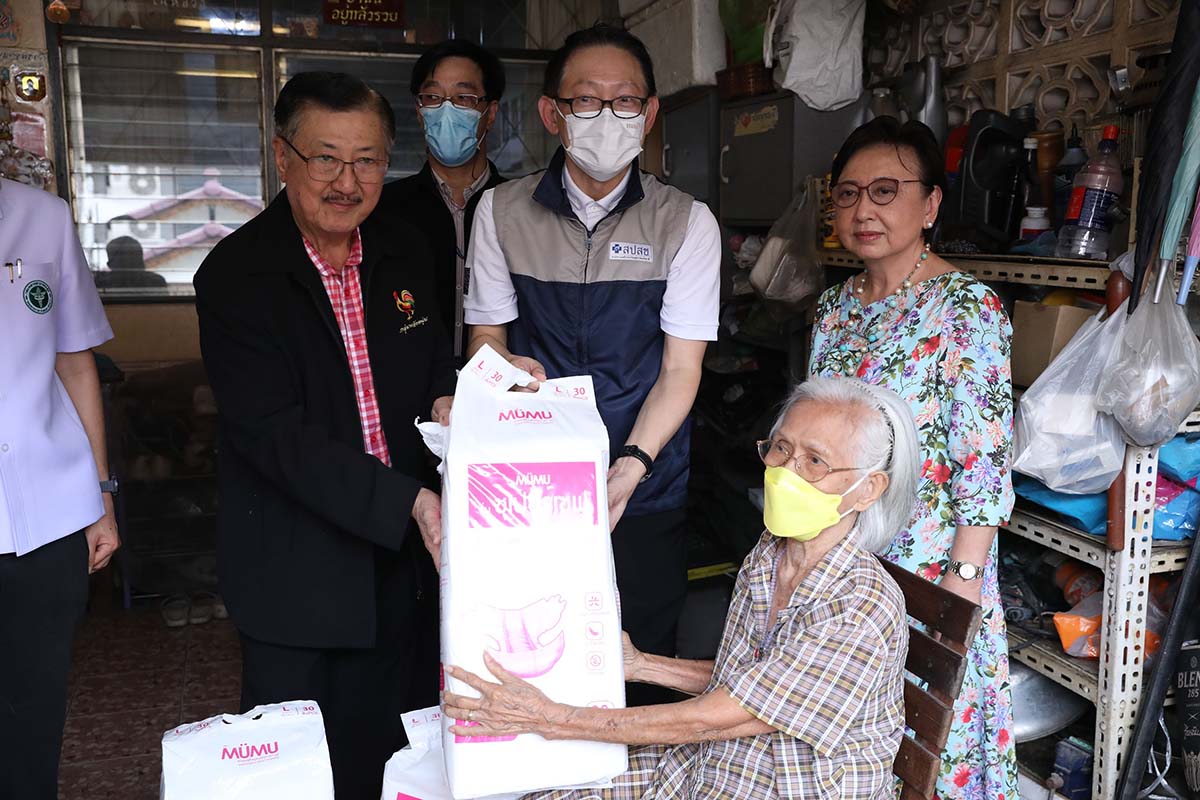
“The value of the Local Health Security Fund lies not only in the number of projects or the amount disbursed, but in giving communities a shared platform to plan and manage their own health. In fiscal year 2027, priorities will include community-based treatment and rehabilitation for people who use drugs, eyeglasses for children, diapers for people with dependency, and proactive community care for people with chronic psychiatric conditions,” Dr. Jadej said.
Dr. Jadej said the NHSO extended the partnership to the provincial level in 2009, beginning with a pilot of provincial rehabilitation funds in cooperation with three Provincial Administrative Organizations (PAOs). The initiative was designed to improve access to rehabilitation and essential assistive devices for patients, people with disabilities and older people through collaboration among PAOs, hospitals, healthcare providers, rehabilitation centers, organizations of people with disabilities and community networks.
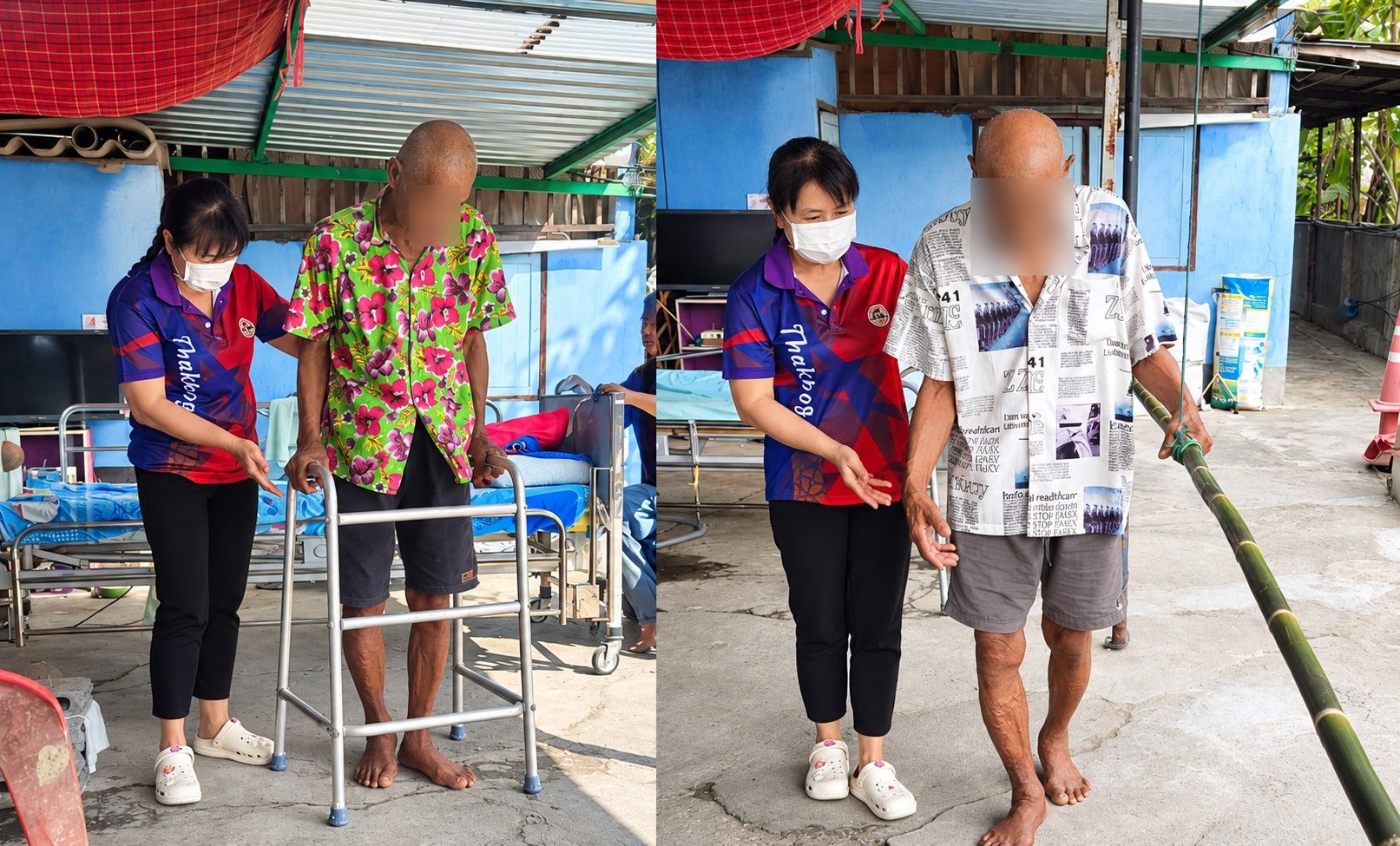
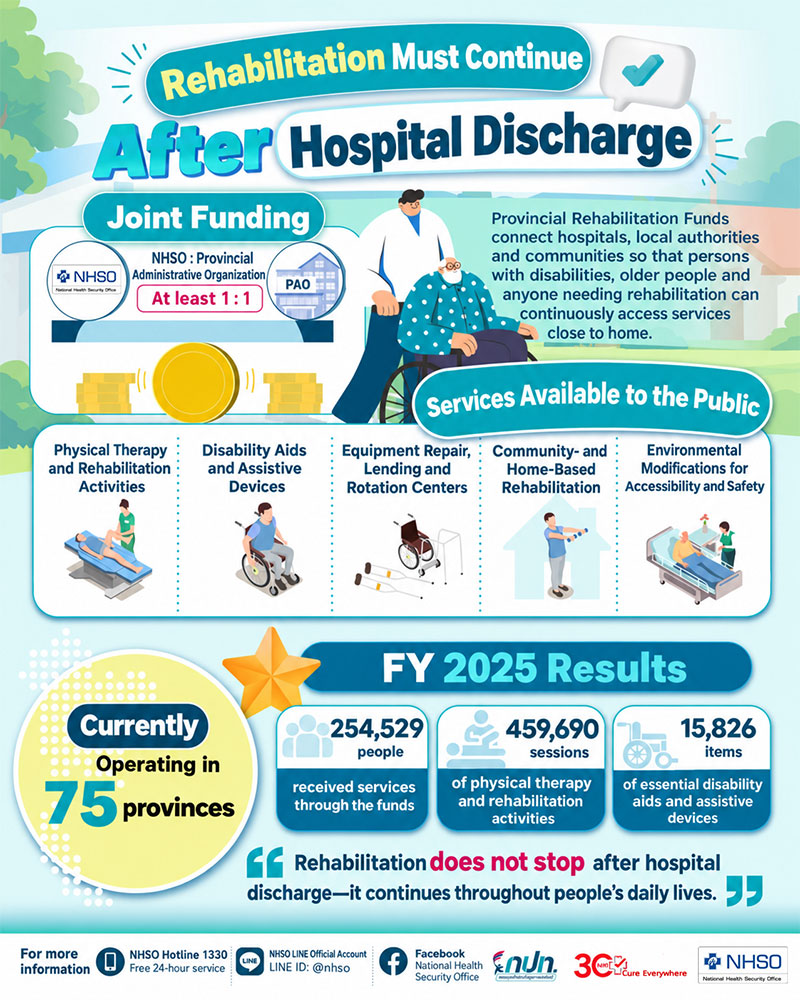
The mechanism uses a matching-fund model. The NHSO allocates funding according to the number of UCS beneficiaries in each province, while the PAO contributes no less than the NHSO allocation—a minimum ratio of one to one. The funding supports physical therapy, occupational therapy, assistive devices, medical equipment loan-and-return centers, community-based rehabilitation centers, proactive services and home modifications that enable people to live more independently.
In fiscal year 2025, PAOs in 74 provinces participated. A total of 254,529 people received services. Of these, 239,320 received physical or occupational therapy through 941 healthcare units, accounting for 459,690 service visits. A further 15,209 people received 15,826 prosthetic, orthotic or other essential assistive devices.
Going forward, the funds will be upgraded from a primary focus on rehabilitation to a broader provincial health mechanism covering health promotion, disease prevention, rehabilitation and proactive primary care services. Provincial data and resources will be linked so that services can be organized around local health needs without duplicating the work of subdistrict-level funds.
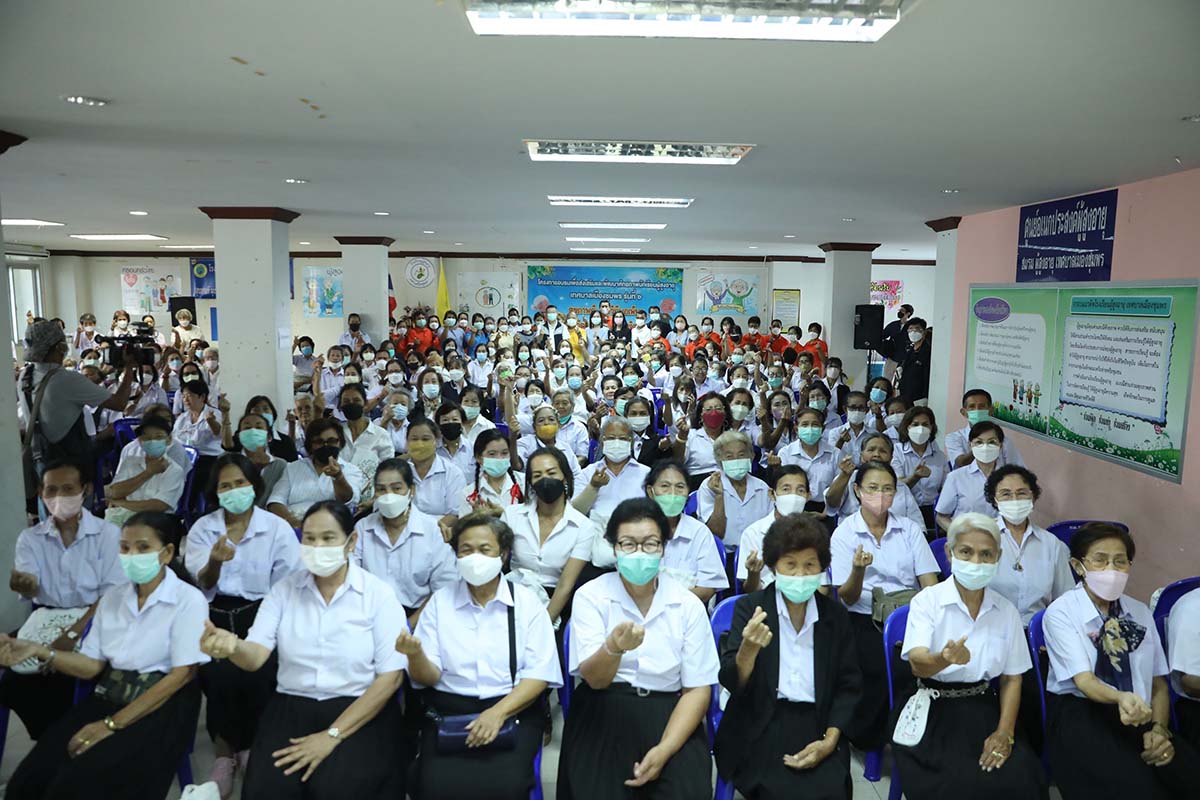
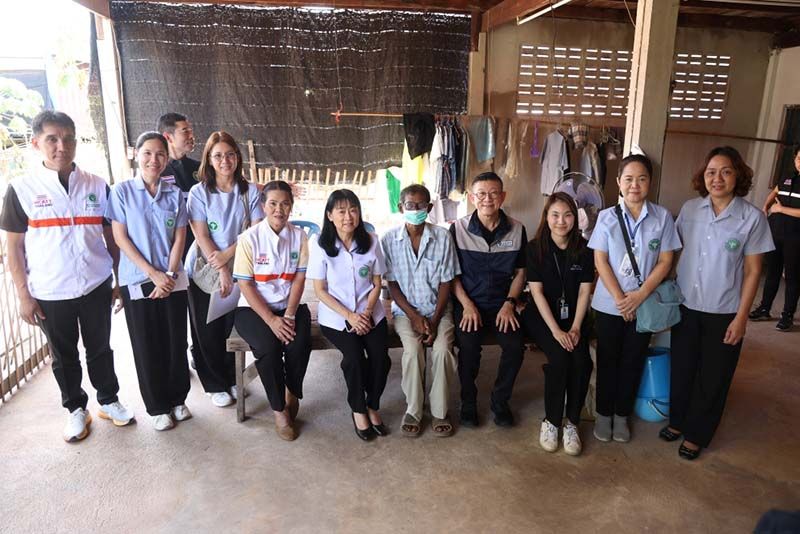
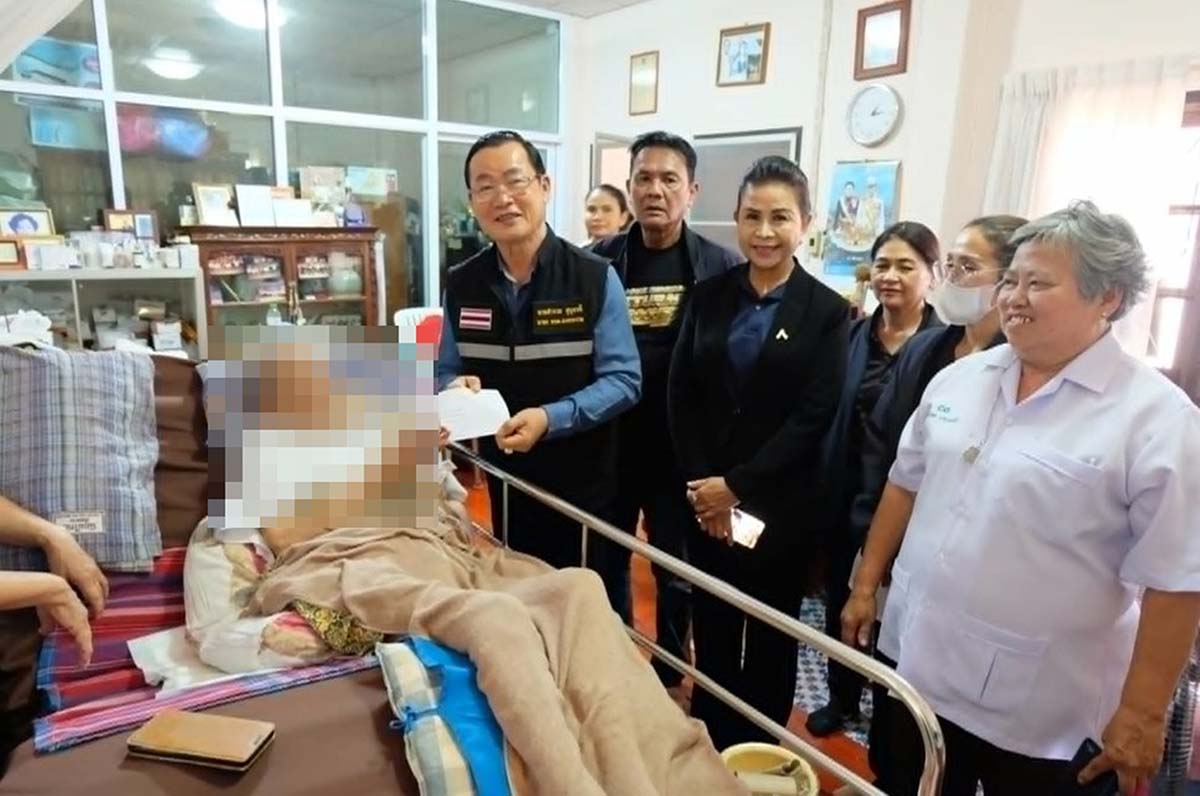
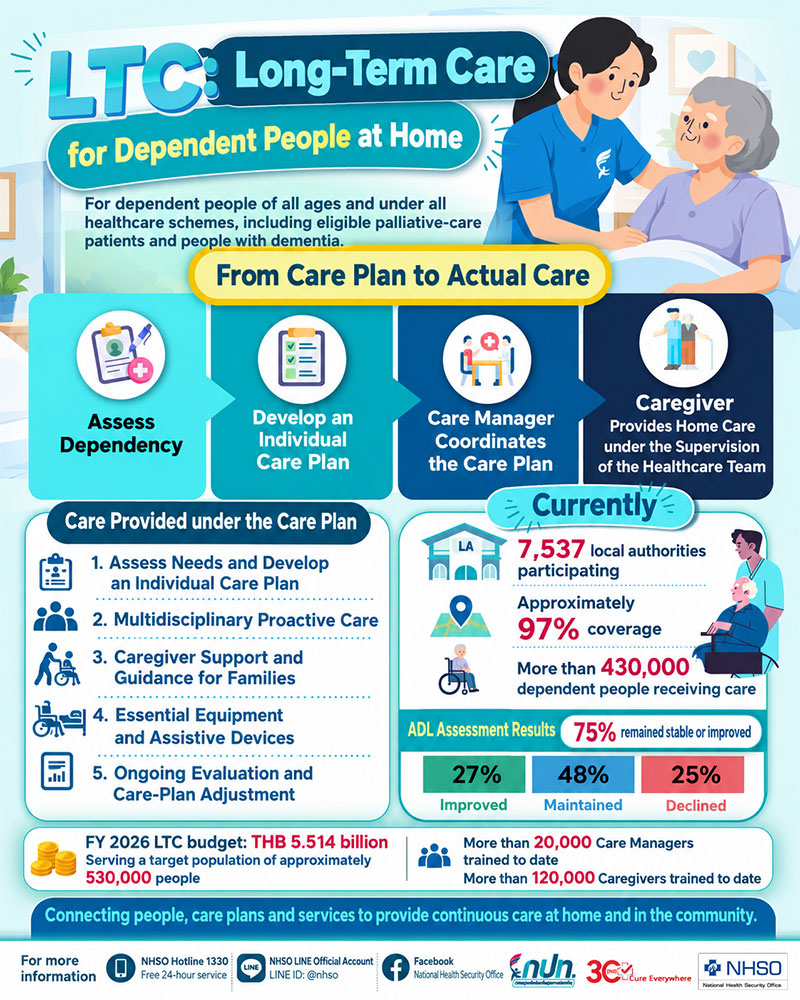
Dr. Jadej added that in 2016 the NHSO further developed its local partnership by introducing the LTC system. It initially served older people with dependency before expanding to people of all ages and under all healthcare schemes, including those receiving end-of-life care and people living with dementia. The aim is to prepare community health systems for Thailand’s transition to a super-aged society. Today, 7,537 of the country’s 7,767 local administrative organizations participate in LTC, representing coverage of approximately 97%. More than 430,000 people with dependency receive care, and 75% have maintained or improved their ability to perform activities of daily living, as measured by the Barthel ADL Index.
The NHSO increased the LTC service budget from 2.9 billion baht in fiscal year 2025 to 5.514 billion baht in fiscal year 2026 to serve an estimated 530,000 people. It is also developing the workforce in partnership with the Department of Health under the Ministry of Public Health. To date, more than 20,000 care managers and over 120,000 caregivers have been trained. Each person with dependency is assessed and receives an individualized care plan, with proactive home-based services provided by family care teams, multidisciplinary teams and caregivers.
In 2025, the government also assigned the NHSO to promote caregiver employment, enabling people with dependency to receive continuous care while creating jobs and distributing income within communities. Local administrative organizations manage and jointly implement the program nationwide.
In the next phase, beginning in 2027, the NHSO and local administrative organizations will develop a standardized caregiver employment system that remains flexible and provides continuity in line with workloads. Home care will be linked with day-care centers, community-based intermediate care and end-of-life care. This will ensure continuity of services for people with dependency while supporting families and reducing their caregiving burden.
Dr. Jadej concluded that the Local Health Security Fund, provincial health security funds and the LTC system have distinct but connected roles. Local funds form the foundation for health promotion and disease prevention; provincial funds link resources and services that require province-wide cooperation; and the LTC system brings continuous care directly to the homes of people with dependency.
“As we enter the third decade, the NHSO and local administrative organizations will more closely integrate the data, plans, budgets and service delivery of these three mechanisms, while clearly monitoring outcomes for the public. Our goal is to enable every area to provide services that address its specific problems, ensure that people can continuously access essential care close to home, and make the community health system a dependable safeguard throughout every stage of life,” said the NHSO Secretary-General.
///////////////////////////////////////////