


Thailand’s Universal Coverage Scheme (UCS), known as the “Gold Card,” is expanding mental health care beyond hospital-based treatment by linking screening, treatment, rehabilitation and follow-up services in communities.
Data from the UCS fund manager National Health Security Office (NHSO) show that 1.83 million UCS beneficiaries with psychiatric conditions accessed outpatient or inpatient services in 2025, up from 1.44 million in 2022. The number of service visits also increased from 5.76 million to 7.30 million over the same period.
Among psychiatric patients receiving services, the largest group—544,205 people—had mental and behavioral disorders due to the use of psychoactive substances.
This was followed by 329,981 people with mood disorders, including depression and bipolar disorder, and 316,197 people with schizophrenia. The distribution highlights the need for the health system to support a range of services, from acute treatment and medication to therapy and long-term follow-up.
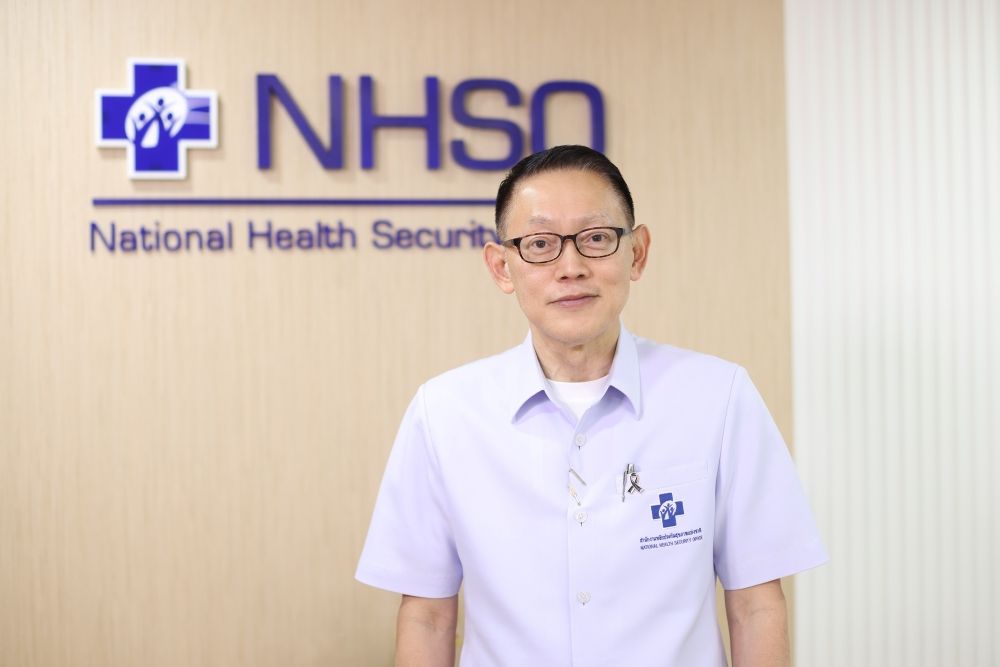
Dr. Jadej Thamthatcharee, Secretary-General of the NHSO, said the increase in service use should not be interpreted as a rise in the prevalence of psychiatric conditions among Thailand’s population.
Rather, the figures indicate that more people are entering the health system and receiving care, supported by expanded benefits, screening, referrals and funding for mental health services.
According to the NHSO’s 2025 report on Thailand’s national health security system, 13.4 million Thais have experienced a mental health problem or psychiatric disorder at least once in their lives, while 4.4 million experienced such problems during the 12 months preceding the survey.
Young people aged 18–24 are identified as a particularly high-risk group requiring appropriate care.
“Care therefore needs to begin before a crisis occurs,” said Dr. Jadej , adding that the NHSO is focusing on developing health benefits and managing the fund to enable people to access screening and treatment quickly, followed by continuous rehabilitation and follow-up care.
The UCS mental health package now covers a range of services, including screening for stress and depression, outpatient and inpatient treatment, telepsychiatry and home ward services.
These can be followed by psychotherapy, behavioral therapy, child development services, treatment for people with substance use disorders and long-acting injectable psychiatric medications.
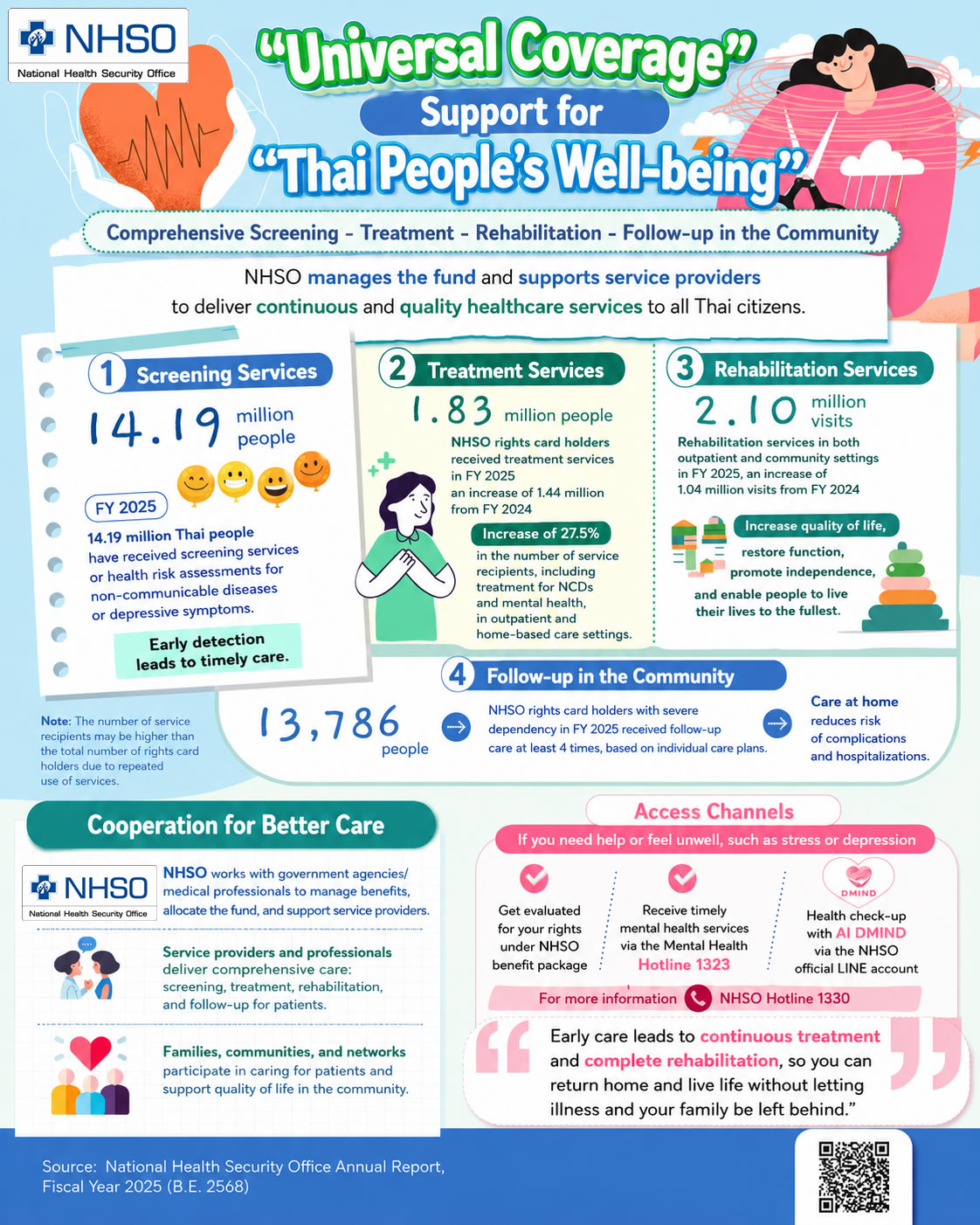
The approach also places greater emphasis on prevention and early identification. In 2025, 14.19 million people aged 35–59 and 60 and above across all healthcare schemes received screening or assessment for mental health, behavioral problems or depression through health promotion and disease prevention services supported by Thailand Universal Health Coverage.
For people already receiving psychiatric care, rehabilitation is becoming a larger part of the service package. Mental health and behavioral rehabilitation services increased from 1.04 million visits in 2022 to 2.10 million in 2025, more than doubling.
Psychotherapy accounted for 1.42 million visits in 2025, compared with 724,879 in 2022. Behavioral therapy increased from 275,059 to 613,614 visits during the same period.
These figures illustrate how the UCS is supporting services beyond the treatment of acute symptoms. Rehabilitation can address emotional and behavioral needs as well as skills required for patients to resume daily life with their families and communities.
Dr. Jadej said the NHSO is also using community-based networks to maintain continuity of care after patients leave hospital. In 2025, 13,786 people with chronic psychiatric conditions were registered for follow-up, compared with 11,825 in 2021. All received at least four follow-up visits under individual care plans.
The follow-up system operates through 118 main or mentoring healthcare units, 905 affiliated units and 3,374 primary care units. Care can cover psychiatric symptoms and medication use as well as family circumstances, daily living, employment, housing, and alcohol or substance use.
Dr. Jadej said these results were achieved through cooperation among healthcare providers at different levels, multidisciplinary teams, families, local administrative organizations and community partners. The NHSO’s role is to develop health benefits, manage the fund and support service costs in ways that facilitate access and connect services from hospitals to communities.
“Going forward, the NHSO will use these data to develop funding mechanisms and support service integration with relevant agencies and partners,” he said.
The NHSO will focus particularly on children and young people, older people and people affected by substance use, with the aim of ensuring that people receive assistance quickly, continuously and close to home.
////////////////////////